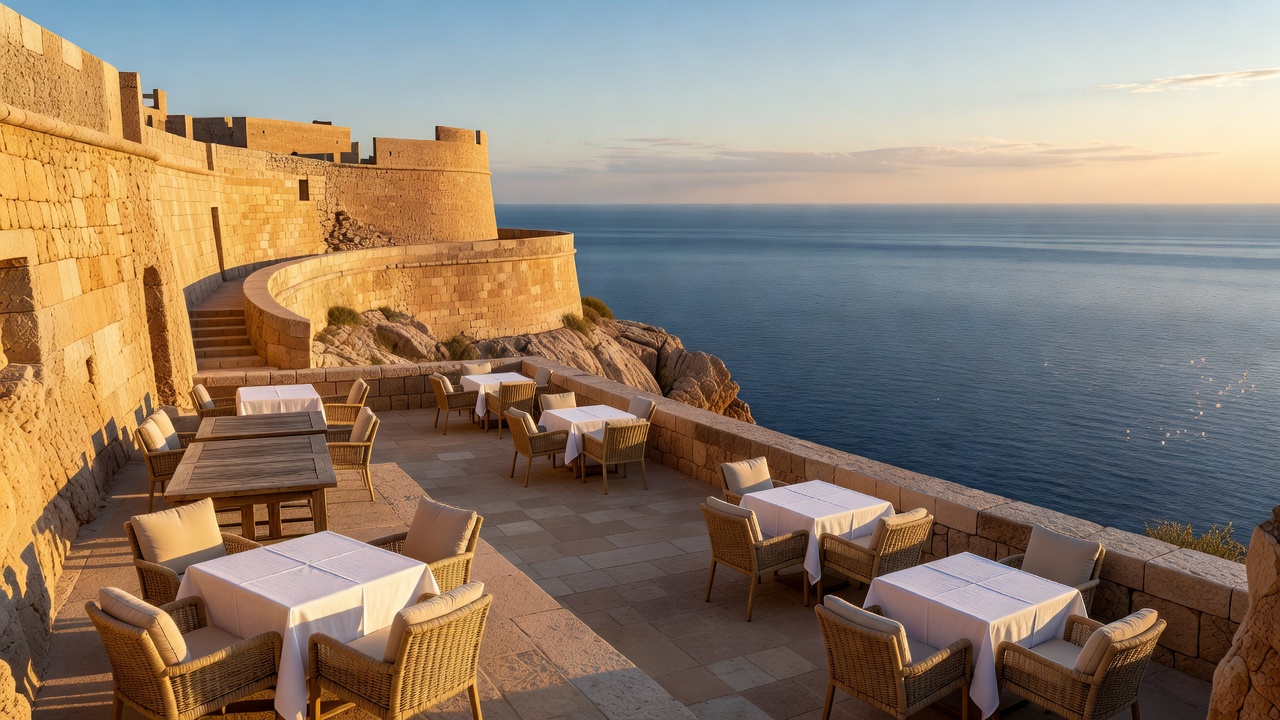
The Citadel Setting and Historical Architecture
Constructed between 1898 and 1901 following heightened tensions during the Spanish-American conflict, Cap Rocat was engineered as a coastal fortress to guard the Bay of Palma. Designed to remain invisible from passing warships at sea, its fortifications were carved directly into the rugged sandstone headland of Cape Enderrocat. When celebrated Mallorcan architect Antonio Obrador undertook the task of transforming this decommissioned military landmark into a luxury sanctuary, the priority was strict heritage preservation under Natura 2000 environmental safeguards.
The result is a tranquil, low-impact estate spanning dozens of hectares along a protected coastline. Arriving guests cross a dramatic drawbridge and dry moat before ascending to ramparts that frame the sparkling azure sea. Instead of intrusive vertical additions, guest quarters and common spaces occupy historic ammunition magazines, watchtowers, and cannon emplacements.
Panoramic Sightlines and Sea-View Orientations
Due to its high vantage point on the southern curve of the Bay of Palma, Cap Rocat provides one of the widest marine vistas in the Balearics. During daylight hours, the Mediterranean exhibits shades varying from pale turquoise along the shallow limestone shelves to deep indigo along the open shipping channel.
As evening falls, the property provides front-row seating for the sunset sinking directly behind the distant ridges of the Serra de Tramuntana across the bay. The lights of Palma Cathedral (La Seu) twinkle across eight nautical miles of open water, creating an enchanting maritime contrast without urban noise.
Key Horizon Perspective
The hotel's saltwater infinity pool is built directly onto the fortress wall at the cliff’s edge. Swimmers look out over the rim into empty ocean space where the horizon line blends seamlessly into the sky.
Accommodations: From Trench Suites to The Sentinels
The resort’s accommodations differ significantly in their interaction with the sea:
- The Sentinels (Los Centinelas): Carved into the cliffs where secret watch posts once stood, these suites offer cliffside plunge pools and sweeping horizons. Guests enjoy uninterrupted privacy, listening to the waves crashing against the rocks below.
- The Suites del Mar: Located just above the shoreline path with individual private gardens and private plunge pools, these units feature direct sightlines across the water toward the setting sun.
- The Double Fortresses: Set within the central moat and military corridors, these rooms emphasize historic stone vaulting and peaceful private patios, though their sea views are framed through arched embrasures rather than open panoramas.
Pros and Cons: Objective Considerations
| Advantages | Considerations |
|---|---|
| Exceptional architectural drama and heritage authenticity | Significant walking distances across stone pathways and steps |
| Protected marine area with private ocean swimming platform | No natural sandy beach directly on-site (rocky cliff access only) |
| Unrivaled privacy and strict adult-oriented peace | High exposure to coastal winds during seasonal weather changes |
| Panoramic open-air dining at Sea Club restaurant | Vehicular travel required to visit Palma center or northern excursions |
Culinary Horizons: The Sea Club & La Fortaleza
Dining at Cap Rocat is intimately linked to the water. The Sea Club is an open-air bistro set upon a rocky promontory overlooking the cove of Cala de la Reina. Traditional Mallorcan rice dishes and catch of the day are prepared over firewood ovens while sea breezes pass through the canvas canopies. For fine dining, La Fortaleza serves contemporary Balearic gastronomy inside the fortress commander’s hall and its candlelit stone courtyard.